DAP with Preschoolers

You are here
DAP with Preschoolers, Ages 3-5
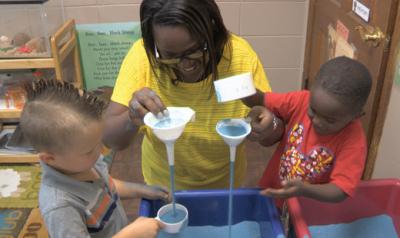
Preschool children learn best when they have positive and caring relationships with adults and other children; when they receive carefully planned, intentional guidance and assistance; and when they can safely encounter and explore many interesting things in their environment.
Children enter preschool with different strengths. One child might love picture books and already know lots of letters but have trouble with social interaction. A classmate may find it easy to initiate play and share toys yet have almost no experience with books and reading.
Preschoolers
- thrive when they can experience new materials, roles, ideas, and activities—especially in pretend play;
- take great interest in feelings and become better able to express their emotions and identify those of others;
- make important cognitive gains that invite them to represent their world in pretend play, symbols, objects, drawings, and words; and
- show astonishing gains in language skills.
Teaching Preschoolers
Good preschool teachers maintain appropriate expectations, providing each child with the right mix of challenge, support, sensitivity, and stimulation. With their knowledge, skill, and training, teachers—in collaboration with families—can ensure that programs promote and enhance every child’s learning.
Let’s see what DAP in preschool looks like:
In the dramatic play center, two 4-year-old girls are pretending to read menus. Maria, noticing that neither girl has taken on the role of waiter, takes notepad and pencil in hand and asks them, “May I take your order?” Over the next few days, more children join the restaurant play. Waiters set tables, take orders, give orders to the cook, and prepare checks for diners.
Maria is an observant, inventive, and intentional teacher. Her intervention sparks fresh play, tempting children to take on different roles, enrich their social and language interactions, and use writing and math for new purposes.
The classroom example on this page is adapted from Learning to Read and Write: Developmentally Appropriate Practices for Young Children.
DAP Resources

Which DAP Resource Is for Me?

DAP Position Statement

3 Core Considerations of DAP
DAP in Action
Play Games, Learn Math! Explore Numbers and Counting with Dot Card and Finger Games