Developmentally Appropriate Practice (DAP) Position Statement

You are here
Each and every child, birth through age 8, has the right to equitable learning opportunities—in centers, family child care homes, or schools—that fully support their optimal development and learning across all domains and content areas.
Children are born eager to learn; they take delight exploring their world and making connections. The degree to which early learning programs support children’s delight and wonder in learning reflects the quality of that setting. Educators who engage in developmentally appropriate practice foster young children’s joyful learning and maximize the opportunities for each and every child to achieve their full potential.
Developmentally Appropriate Practice
Purpose
To support educators’ use of developmentally appropriate practice, this statement identifies guidelines for decision making in six key areas of responsibility that correspond to the Professional Standards and Competencies for Early Childhood Educators.
Learn more about the purpose of developmentally appropriate practice
Statement of Position & Definition of DAP
Statement of Position
Each and every child, birth through age 8, has the right to equitable learning opportunities—in centers, family child care homes, or schools—that fully support their optimal development and learning across all domains and content areas.
Definition of Developmentally Appropriate Practice
NAEYC defines “developmentally appropriate practice” as methods that promote each child’s optimal development and learning through a strengths-based, play-based approach to joyful, engaged learning. Educators implement developmentally appropriate practice by recognizing the multiple assets all young children bring to the early learning program as unique individuals and as members of families and communities.
Core Considerations
Developmentally appropriate practice requires early childhood educators to seek out and gain knowledge and understanding using three core considerations: commonality in children’s development and learning, individuality reflecting each child’s unique characteristics and experiences, and the context in which development and learning occur.
Principles of Child Development and Learning
NAEYC’s guidelines and recommendations for developmentally appropriate practice are based on the nine principles and their implications for early childhood education professional practice.
Guidelines for Developmentally Appropriate Practice in Action
Based on the principles outlined, the following guidelines address decisions that early childhood professionals make in six key and interrelated areas of practice:
- Creating a Caring, Equitable Community of Learners
- Engaging in Reciprocal Partnerships with Families and Fostering Community Connections
- Observing, Documenting, and Assessing Children’s Development and Learning
- Teaching to Enhance Each Child’s Development and Learning
- Planning and Implementing an Engaging Curriculum to Achieve Meaningful Goals
- Demonstrating Professionalism as An Early Childhood Educator
Continue to Guidelines for Developmentally Appropriate Practice in Action
Recommendations for Implementing DAP
Educators make decisions that result in developmentally appropriate practice within the context of their specific program setting, a larger early childhood sector, and extended systems with institutionalized policies and practices.
The following recommendations are offered in that spirit and connect to and reflect many of the recommendations highlighted in the Advancing Equity in Early Childhood Education position statement.
Recommendations for Implementing Developmentally Appropriate Practice
Appendices and Endnotes
Additional Resources
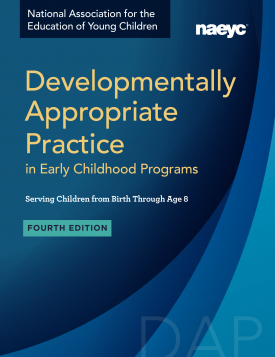


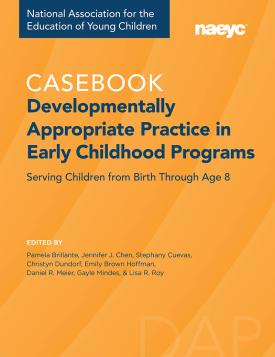
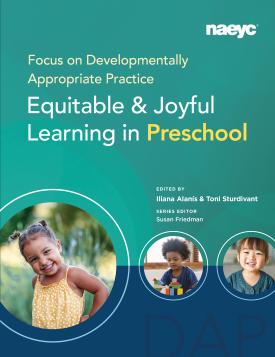
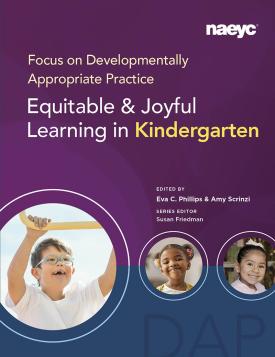
NAEYC accepts requests for limited use of our copyrighted material. For permission to reprint, adapt, translate, or otherwise reuse and repurpose content from the final published document, review our guidelines at NAEYC.org/resources/permissions.
Developmentally Appropriate Practice: A Position Statement of the National Association for the Education of Young Children. Copyright © 2020 by the National Association for the Education of Young Children. All rights reserved.