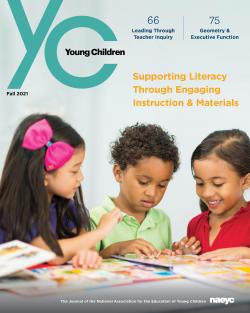
This Young Children cluster offers a variety of practices and materials to help early childhood educators foster a love of literacy and support early reading, writing, listening, and speaking development.
Supporting Literacy Through Engaging Instruction & Materials
The Fall 2021 issue of Young Children includes a cluster of articles offering a variety of practices and materials to help early childhood educators foster a love of literacy and support early reading, writing, listening, and speaking development.
In our ongoing work, we have identified four factors that influence the degree to which teachers are able to fuel science inquiry with multilingual learners while simultaneously promoting equitable and inclusive classroom science environments.
Authored by
Authored by:
Cindy Hoisington, Jessica Mercer Young, Jeff Winokur
Early childhood educators know how challenging transitions can be! NAEYC has collected a list of resources to support your unique ECE needs. Whether going back to school or looking for strategies in the classroom, NAEYC is here to help.
NAEYC promotes high-quality early learning for all children, birth through age 8, by connecting practice, policy, and research. We advance a diverse early childhood profession and support all who care for, educate, and work on behalf of young children.
NAEYC promotes high-quality early learning for all children, birth through age 8, by connecting practice, policy, and research. We advance a diverse early childhood profession and support all who care for, educate, and work on behalf of young children.
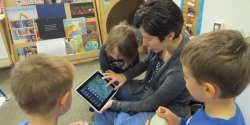
Tablets, apps, and other digital technology can help children learn—as long as you carefully plan the content, and monitor how children use them. Read on for ideas for using apps and other digital technology in your classroom!
Authored by
Authored by:
Jennifer Garrette Lisy, Kathleen A. Paciga, Mary Quest
Building relationships with the community has multiple benefits: Your organization or school builds name recognition and a positive reputation; you are informed of local events and community resources; and your organization’s credibility is enhanced.
Place-based education uses local cultures, heritage, landscapes, opportunities, and experiences to create a curriculum in which literacy, mathematics, social studies, science, and arts learning occur in the context of place.
It’s not uncommon to have children in your program who spend time with parents in two different homes. Individualizing communication is an effective way to recognize and welcome diverse family structures.
During a family conference, it’s important to provide a detailed—but not overwhelming—picture of a child’s progress. The following example (shared and discussed at a family conference) shows the strengths, progress, and goals of a young student.
Whether you’re a seasoned teacher or this will be your first year, these reminders will help you plan the many steps of family conferences—from preconference scheduling to follow-up.